How AI Software Development Services Are Transforming Modern Manufacturing Operations at Scale
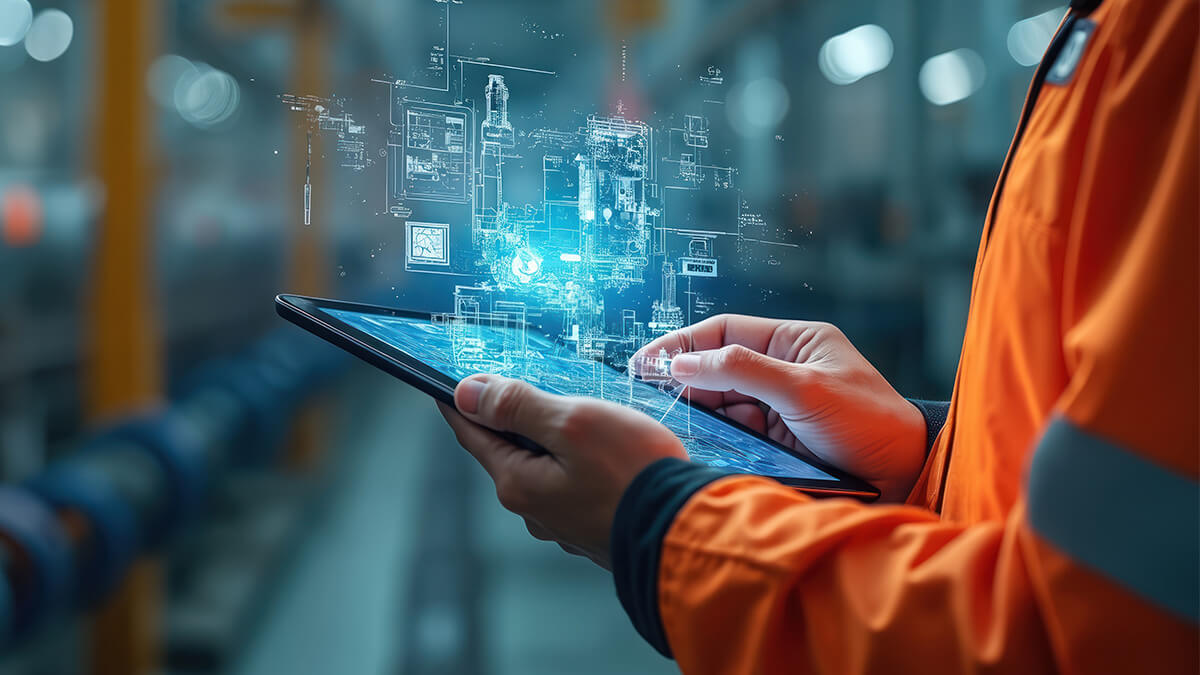
Walk into a modern factory today and the story is no longer just about machines, manpower, and material movement. The real drama is happening in the gaps between systems. A sensor records vibration. A production line slows by a few seconds. A quality inspection flags a surface defect. A planner adjusts output because a supplier is late. For decades, these moments lived in separate corners of the plant. Now, artificial intelligence is pulling them into one operational narrative.
That is where AI software development services are becoming more than a technology upgrade. They are becoming the new operating layer for manufacturers that want to scale without losing control. The winners are not simply buying AI tools. They are building connected systems that understand production behavior, predict risk, and help people make faster decisions under pressure.
The catch is important. AI does not magically fix manufacturing. It amplifies whatever foundation already exists. Clean data, clear process ownership, reliable integrations, and disciplined execution decide whether AI becomes a competitive advantage or just another expensive dashboard. That may sound less glamorous than the usual factory-of-the-future pitch, but it is the truth manufacturers need before they invest.
The factory floor has become a data battlefield
Manufacturing has always produced data. The difference now is velocity. Machines, PLCs, SCADA systems, ERP platforms, MES tools, IoT sensors, inspection cameras, warehouse systems, and supplier portals all generate signals. Yet in many plants, the data still behaves like a crowd with no conductor.
This is the first transformation AI software development services bring at scale. They do not begin with a shiny model. They begin by connecting the operational nervous system.
A custom AI architecture can collect production data, clean it, structure it, and route it into applications that matter. Supervisors can see live bottlenecks. Maintenance teams can receive alerts before equipment failure. Quality teams can detect recurring defects. Finance leaders can understand how downtime affects margin. The point is not more data. The point is usable intelligence.
For manufacturers operating across multiple plants, this becomes even more critical. A single facility may tolerate manual reconciliation. A multi-site operation cannot. At scale, inconsistent data definitions, disconnected systems, and delayed reporting become operational debt. AI-ready software reduces that debt by creating one version of truth across machines, teams, and locations.
Predictive maintenance is changing the economics of downtime
Downtime has always been the villain in manufacturing. It rarely arrives politely. It interrupts schedules, delays shipments, burns labor hours, frustrates customers, and forces managers into firefighting mode.
Predictive maintenance changes the sequence. Instead of waiting for equipment to fail, AI models analyze vibration, temperature, pressure, acoustic patterns, cycle history, and maintenance records to detect early warning signs. The software does not merely say, “Something is wrong.” A well-built system can estimate risk, prioritize assets, recommend inspection windows, and connect the alert to a maintenance workflow.
This is where custom development matters. Every plant has its own asset mix, operating conditions, maintenance culture, and failure patterns. A generic model may recognize common anomalies, but it may miss the practical nuance of a specific line, environment, or production schedule. AI software development services allow manufacturers to build predictive systems around real equipment behavior rather than abstract assumptions.
The commercial impact is straightforward. Fewer surprise stoppages. Better spare parts planning. More disciplined maintenance scheduling. Longer asset life. Less operational panic. It is not glamorous, but it is one of the most bankable use cases in industrial AI.
Quality control is moving from inspection to prevention
Traditional quality control often catches defects after value has already been added. The product has moved down the line. Material has been consumed. Labor has been spent. Rework or scrap becomes the penalty for late detection.
Computer vision and AI-based inspection are shifting that model. Cameras placed across the production line can identify surface defects, dimensional issues, assembly errors, missing components, labeling problems, and packaging inconsistencies. When paired with machine learning, the system can improve pattern recognition over time and give quality teams better visibility into recurring failures.
The sharper opportunity is not just detection. It is prevention.
When inspection data connects with machine settings, supplier batches, operator shifts, environmental conditions, and production speeds, manufacturers can begin to ask better questions. Did defects increase after a tool change? Are failures concentrated around one material batch? Does a certain machine drift after long runs? Is one process parameter quietly damaging output?
This is where AI becomes investigative. It helps teams move from “What went wrong?” to “Why does this keep happening?” That is the difference between quality control as a checkpoint and quality intelligence as a business capability.
Production planning is getting a serious reality check
Anyone who has worked around manufacturing knows that planning is where optimism often meets physics. Orders change. Machines go down. Labor availability shifts. Raw materials arrive late. Customer priorities move. The spreadsheet, heroic as it may be, was never built to keep up with this level of complexity.
AI-powered planning software can analyze order demand, machine capacity, workforce availability, inventory levels, supplier reliability, lead times, and historical production performance. Instead of giving planners a static schedule, it can generate dynamic scenarios.
What happens if Line 2 runs below target for three hours? Which orders should move first if a raw material shipment is delayed? How does overtime affect cost versus delivery risk? Can production be balanced across facilities without creating downstream inventory pressure?
At scale, these questions decide whether a manufacturer operates proactively or constantly negotiates with chaos. AI software does not replace experienced planners. It gives them a sharper cockpit. The human still makes judgment calls, but the system brings hidden constraints and trade-offs into view.
Legacy modernization is the unglamorous foundation of AI success
Here is the part many boardroom AI conversations skip. A lot of manufacturing still runs on legacy systems that were never designed for real-time intelligence. Some plants rely on spreadsheets, old databases, isolated machines, custom desktop tools, or heavily modified enterprise systems that only a handful of employees truly understand.
Ripping everything out is rarely practical. Production cannot stop while leadership chases a perfect technology stack. This is why legacy modernization has become central to AI software development services.
The smarter route is often incremental. Build APIs. Add data pipelines. Introduce middleware. Connect older systems to modern dashboards. Deploy edge computing where latency matters. Create secure integration layers between ERP, MES, SCADA, PLCs, IoT devices, and cloud environments. Modernization is not always a dramatic replacement story. Sometimes it is a careful act of industrial diplomacy.
When done well, manufacturers gain AI capabilities without forcing teams to abandon every familiar workflow at once. That balance matters. Adoption rises when technology fits the reality of the plant rather than demanding that the plant bend itself around the technology.
The real value of AI agents is operational follow-through
AI agents are becoming one of the more interesting developments in manufacturing software. Not because they sound futuristic, but because they address a common problem: insights often die before action.
A dashboard may show a risk. A report may reveal a delay. A supervisor may notice a pattern. But who follows up? Who triggers the workflow? Who checks whether the issue was resolved? Who escalates it if it was ignored?
AI agents can monitor operational signals, trigger tasks, recommend next actions, summarize incidents, and guide teams through standard response procedures. In a maintenance context, an agent might detect an anomaly, check the asset history, create a work order, notify the technician, and summarize the likely cause. In a production context, it might flag schedule slippage, compare alternate routing options, and alert planning teams.
This is not about removing people from the loop. In serious manufacturing environments, human oversight remains essential. The value is in reducing the lag between signal and response. At scale, those minutes matter.
Generative AI is entering the back office of the factory
Generative AI in manufacturing is often misunderstood. The highest value is not always on the production line. In many cases, it starts with documentation, reporting, training, compliance, and knowledge retrieval.
Manufacturing teams produce a heavy volume of operational text: shift reports, maintenance logs, audit notes, SOPs, non-conformance reports, safety documentation, inspection summaries, supplier communications, and executive updates. Generative AI systems can help draft, summarize, classify, and retrieve this information faster.
A plant manager could ask, “What were the top causes of downtime this week?” A quality leader could generate a summary of recurring defects. A technician could search maintenance history conversationally. Compliance teams could prepare audit-ready documentation with better traceability.
The risk, of course, is accuracy. Generative AI must be governed carefully. It should pull from verified data sources, maintain audit trails, respect permissions, and avoid presenting assumptions as facts. In manufacturing, confidence without evidence is dangerous. The best systems are not just fluent. They are grounded, traceable, and controlled.
Cybersecurity and governance cannot be afterthoughts
The more connected a factory becomes, the more serious security becomes. AI systems often interact with sensitive production data, equipment telemetry, supplier information, customer orders, and enterprise platforms. Poorly designed integrations can create vulnerabilities across operational technology and information technology environments.
That is why scalable AI software development must include role-based access, encryption, audit logging, identity management, secure APIs, network segmentation, model governance, and compliance-aware deployment. Manufacturers also need clarity around who can approve automated actions, how model performance is monitored, and when human review is mandatory.
Governance may not sound exciting, but it is what separates a pilot from a production-grade system. A proof of concept can survive with manual oversight and narrow scope. Enterprise AI cannot. Once AI influences planning, maintenance, quality, inventory, or supplier decisions, accountability must be engineered into the system.
Why custom AI development beats one-size-fits-all deployment
Manufacturing is too specific for lazy software thinking. A pharmaceutical plant, automotive supplier, electronics manufacturer, food processor, steel operation, and industrial equipment producer may all care about efficiency, but their processes, constraints, regulations, and risk tolerance differ sharply.
Custom AI software development allows the solution to match the operation. The system can be trained around plant-specific data, integrated with existing platforms, designed for user roles, deployed across cloud or on-premise infrastructure, and scaled plant by plant. It can also reflect local compliance requirements, production realities, and business priorities.
This matters because manufacturing ROI does not come from AI in isolation. It comes from the workflow around AI. A prediction that does not reach the right person in time has limited value. A recommendation that does not fit the approval process will be ignored. A model that cannot explain its logic may never earn operator trust.
Custom development closes that gap between intelligence and execution.
What manufacturers should demand from an AI software partner
The strongest partners do not begin by selling algorithms. They begin by interrogating the operation. Where is downtime most expensive? Which quality issues repeat? Which planning decisions cause the most friction? Which systems hold critical data? Which teams will use the output? What does success look like in operational and financial terms?
A credible partner should bring consulting, architecture, data engineering, model development, integrations, MLOps, security, dashboards, and long-term support into one delivery model. They should understand ERP, MES, SCADA, PLCs, IoT gateways, cloud platforms, edge devices, and industrial data pipelines. More importantly, they should understand that manufacturing teams do not have patience for theatrical technology. They need systems that work under pressure.
The engagement model also matters. Some manufacturers need a dedicated AI delivery team. Others need a tightly scoped pilot. Some may benefit from a build-operate-transfer framework where the partner stabilizes the system and then transitions ownership. The right model depends on maturity, urgency, budget, and internal capability.
The uncomfortable truth about scale
Scaling AI in manufacturing is not the same as duplicating software. A model that works in one plant may need recalibration in another. Machines differ. Operators behave differently. Local suppliers vary. Data quality changes. Even identical equipment can perform differently under different loads, climates, and maintenance histories.
This is why MLOps is critical. Models need monitoring, retraining, version control, performance measurement, and governance. The system must detect drift, manage exceptions, and keep improving as the business changes.
Manufacturers that understand this treat AI as an operating capability, not a campaign. They build the muscle to test, deploy, measure, and refine continuously. That is how AI moves from pilot theatre to enterprise value.
Conclusion
AI software development services are transforming manufacturing because they solve a very old problem with a new level of precision: how to make complex operations visible, predictable, and controllable at scale. The technology is impressive, but the real story is practical. Better maintenance. Stronger quality. Faster planning. Cleaner data. Safer integrations. Smarter decisions. Less guesswork.
For manufacturers evaluating AI solutions for Manufacturing, the mandate is clear. Do not chase AI because the market is loud. Build it because your operation has measurable problems worth solving. Start with the use case, connect the data, protect the workflow, involve the people, and scale only when the system proves value. That is how modern manufacturing moves from reactive execution to intelligent operations.
FAQs
What are AI software development services in manufacturing?
AI software development services in manufacturing involve designing, building, integrating, and maintaining intelligent systems that improve production planning, maintenance, quality control, inventory, supply chain visibility, and operational decision-making. These services often include data engineering, machine learning models, IoT integration, dashboards, workflow automation, and secure deployment.
How does AI reduce downtime in manufacturing?
AI reduces downtime by analyzing equipment data such as vibration, temperature, pressure, cycle time, and maintenance history. The system identifies early warning signs of failure and alerts teams before a breakdown occurs. This helps manufacturers schedule maintenance more effectively and avoid unexpected production stoppages.
Can AI work with legacy manufacturing systems?
Yes, AI can work with legacy systems when the architecture is designed correctly. Manufacturers can use APIs, middleware, industrial connectors, edge devices, and data pipelines to connect older platforms with modern AI applications. This allows plants to modernize gradually without disrupting daily production.
Is computer vision useful for quality inspection?
Computer vision is highly useful for quality inspection because it can detect defects, missing parts, surface issues, assembly errors, and packaging inconsistencies at production speed. When connected with production data, it can also help identify why defects happen repeatedly.
What makes AI implementation successful in manufacturing?
Successful AI implementation depends on clear business goals, reliable data, strong integrations, user adoption, cybersecurity, model governance, and measurable KPIs. The best projects start with a specific operational problem and scale after proving value in real production conditions.
Should manufacturers choose custom AI software or ready-made tools?
Ready-made tools may work for narrow use cases, but custom AI software is often better for complex manufacturing environments. Custom systems can align with plant-specific processes, existing platforms, compliance needs, equipment behavior, and multi-site scaling requirements.