Product Recommendations Engines for Anonymous Shoppers: How They Work
Personalization has become a core expectation in ecommerce. Customers expect retailers to recommend relevant products, simplify product discovery, and create shopping experiences that feel tailored to their interests. Traditionally, personalization has relied heavily on known customer data such as purchase history, loyalty program activity, and account information.
However, a significant portion of ecommerce traffic comes from anonymous visitors. These shoppers browse products, search categories, compare options, and even add items to carts without logging in or identifying themselves. Despite the lack of explicit customer profiles, these visitors often represent valuable purchase opportunities.
This creates an important challenge for retailers: how can businesses deliver personalized product recommendations when they know very little about the customer?
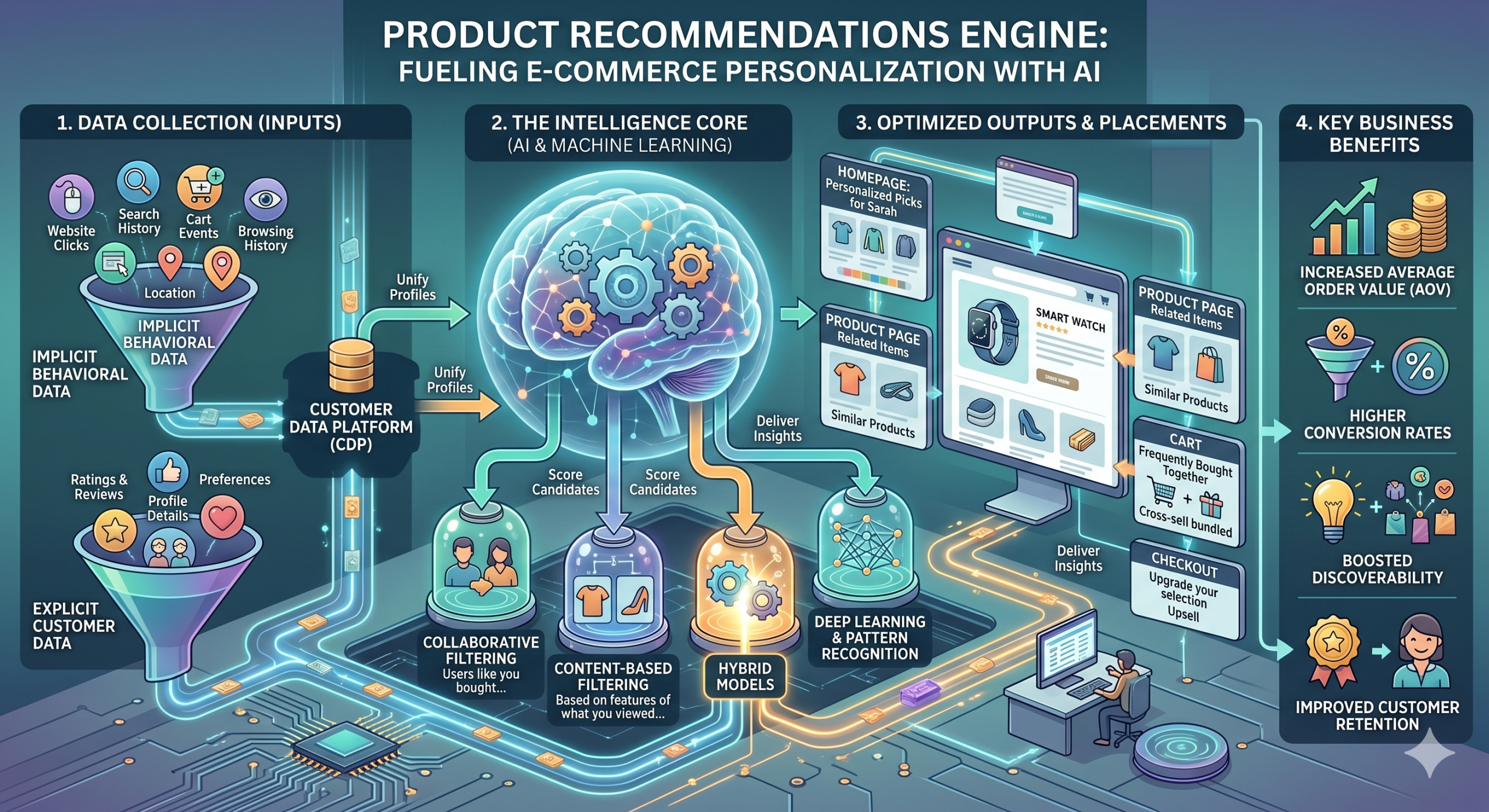
The answer lies in modern product recommendations engines. Powered by artificial intelligence, machine learning, and real-time behavioral analysis, these systems can generate highly relevant recommendations for anonymous shoppers based on session activity, contextual signals, and predictive insights.
As customer acquisition costs continue rising, helping anonymous visitors discover the right products has become increasingly important for ecommerce success.
Why Anonymous Shoppers Matter
Many ecommerce businesses focus heavily on known customers, but anonymous visitors often make up the majority of website traffic.
Anonymous shoppers may:
- Browse multiple products
- Search categories
- Compare prices
- Read reviews
- Add products to carts
- Return multiple times before purchasing
In many cases, these visitors are actively researching products and demonstrating purchase intent.
If retailers fail to personalize experiences for anonymous users, they risk losing potential conversions.
The Challenge of Personalizing for Anonymous Visitors
Known customers provide access to valuable information such as:
- Purchase history
- Loyalty status
- Customer preferences
- Previous interactions
- Email engagement
Anonymous visitors typically do not provide this information immediately.
This creates several challenges:
Limited Historical Data
Retailers cannot rely on long-term customer profiles.
No Account-Based Personalization
Personalization must occur without login credentials.
Short Decision Windows
Anonymous shoppers often make quick browsing decisions.
High Abandonment Risk
Irrelevant experiences increase bounce rates and lost opportunities.
To overcome these challenges, recommendation engines focus on real-time customer behavior and contextual intelligence.
What Is a Product Recommendations Engine?
A product recommendations engine is a technology system that identifies and displays products most likely to interest a customer.
Recommendation engines analyze various signals to determine product relevance and improve product discovery.
Common use cases include:
- Homepage recommendations
- Product detail page suggestions
- Search results enhancements
- Cart recommendations
- Email recommendations
Modern recommendation engines increasingly rely on artificial intelligence to improve accuracy and personalization.
How Product Recommendations Engines Work for Anonymous Shoppers
Session-Based Behavioral Analysis
One of the most important techniques used for anonymous personalization is session-based analysis.
Even without customer identification, recommendation engines can observe behaviors such as:
- Product views
- Category browsing
- Search queries
- Click patterns
- Cart additions
- Time spent on pages
These interactions provide valuable clues about customer interests and intent.
For example:
- A shopper viewing multiple running shoes likely has different interests than someone browsing luxury handbags.
- Category exploration can reveal purchase goals quickly.
Session behavior becomes the foundation for anonymous personalization.
Real-Time Behavioral Signals
Anonymous visitor personalization depends heavily on real-time data.
Recommendation engines continuously monitor:
- Current browsing activity
- Product engagement
- Search refinements
- Navigation patterns
As new interactions occur, recommendations update dynamically.
This allows retailers to adapt experiences while customers are actively shopping.
Real-time responsiveness improves relevance significantly.
Contextual Personalization
Modern recommendation engines also consider contextual signals.
Examples include:
Device Type
Mobile shoppers often behave differently from desktop users.
Geographic Location
Regional trends and product availability can influence recommendations.
Traffic Source
Visitors arriving from paid ads may have different intent than organic search visitors.
Time and Seasonality
Seasonal trends often impact product relevance.
Contextual data helps improve recommendation quality even when customer identities remain unknown.
AI and Machine Learning for Anonymous Recommendations
Artificial intelligence plays a critical role in anonymous personalization.
AI models analyze large volumes of behavioral data to identify patterns and predict customer interests.
Machine learning helps recommendation engines:
- Understand browsing intent
- Predict product affinity
- Optimize recommendation rankings
- Adapt recommendations dynamically
These systems continuously learn from customer interactions and improve over time.
This allows businesses to personalize experiences without requiring extensive customer profiles.
Collaborative Filtering Techniques
Many recommendation engines use collaborative filtering to support anonymous personalization.
Collaborative filtering identifies relationships between products based on how other customers interact with them.
For example:
- Customers who viewed Product A often viewed Product B.
- Customers purchasing Product C frequently purchased Product D.
Even without individual customer history, these patterns help generate relevant recommendations.
Collaborative filtering remains one of the most widely used recommendation approaches.
Content-Based Recommendation Models
Content-based recommendation systems focus on product attributes rather than customer identities.
These systems evaluate characteristics such as:
- Category
- Brand
- Price range
- Style
- Features
If an anonymous shopper engages with specific products, the engine can recommend similar items based on shared attributes.
This improves product discovery while maintaining personalization.
Product Recommendations Across the Customer Journey
Anonymous shopper recommendations appear throughout the ecommerce experience.
Homepage Recommendations
Highlight products aligned with current browsing interests.
Product Detail Pages
Suggest complementary or similar products.
Search Experiences
Personalize product rankings and recommendations.
Cart Pages
Recommend additional products that may increase basket size.
Exit Intent Experiences
Promote relevant products before visitors leave the site.
These touchpoints help guide anonymous shoppers toward conversion.
Benefits of Anonymous Shopper Recommendations
Improved Product Discovery
Customers find relevant products more quickly.
Higher Conversion Rates
Relevant recommendations increase purchase likelihood.
Reduced Bounce Rates
Personalized experiences encourage deeper engagement.
Better Customer Acquisition Efficiency
More visitors convert without requiring immediate identification.
Stronger Future Personalization
Anonymous interactions can later enrich customer profiles once identification occurs.
Identity Resolution and Future Customer Profiles
While recommendations often begin anonymously, many retailers eventually connect these interactions to known customer identities.
This may happen through:
- Account creation
- Email subscriptions
- Purchases
- Loyalty program enrollment
Customer data platforms and identity resolution systems help merge anonymous behavior with known customer profiles.
This creates more complete customer intelligence over time.
Challenges Businesses Must Address
Limited Historical Context
Anonymous sessions provide less information than known customer profiles.
Cross-Device Identification
Customers often switch between devices before purchasing.
Privacy Requirements
Businesses must personalize responsibly while respecting privacy regulations.
Data Quality and Infrastructure
Recommendation accuracy depends on connected and reliable data systems.
Addressing these challenges is critical for long-term success.
Best Practices for Anonymous Shopper Recommendations
Prioritize Real-Time Behavioral Signals
Current session behavior often provides the strongest indicators of intent.
Use AI to Adapt Continuously
Machine learning improves personalization accuracy over time.
Leverage Contextual Data
Location, device, and traffic source can enhance relevance.
Optimize Product Discovery
Recommendations should reduce friction and simplify decision-making.
Balance Personalization and Exploration
Customers should still discover new products naturally.
The Future of Anonymous Personalization
Anonymous shopper personalization will continue evolving alongside advancements in AI and customer intelligence.
Future trends include:
- Predictive intent modeling
- Real-time recommendation optimization
- Privacy-centric personalization strategies
- Cookieless customer intelligence
- AI-driven product discovery experiences
These innovations will make anonymous personalization more accurate and effective.
Conclusion
Product recommendations engines are increasingly capable of delivering personalized experiences for anonymous shoppers, even without traditional customer profiles. By leveraging session-based behavior, real-time signals, contextual data, artificial intelligence, and collaborative filtering techniques, retailers can help anonymous visitors discover relevant products and move more confidently toward purchase decisions.
As ecommerce competition grows and customer expectations continue rising, businesses that effectively personalize experiences for anonymous shoppers will be better positioned to improve engagement, increase conversions, and maximize the value of every visitor who enters their digital storefront.