Why Every Missed Call Is a Direct Hit to Your Monthly Revenue
Nobody thinks about the calls they missed. That is exactly the problem. At the end of a busy week, most business owners review what happened. How many covers were served? How many bookings came in? How many walk-ins converted? What the revenue looked like compared to last week. Nobody pulls up a report showing how many calls went unanswered. Because that report does not exist. The missed call leaves nothing behind. No name, no number in most cases, no record of what the person wanted or how close they were to spending money with you. It just disappears. And so does the revenue that was attached to it.
The Customer Who Called Once and Never Came Back
Think about the last time you called a business, got no answer, and tried again later. If you are being honest, you probably did not try again. You found another option, or the moment passed, or you simply moved on. That is what most people do. The motivation to call in the first place was tied to a specific moment, a specific need, and when that moment was not met, the energy behind it dissolved. For a restaurant, that moment might be a Friday afternoon when someone is trying to book a table for a birthday dinner that evening. For a nail salon, it might be a Thursday call from someone trying to get in before the weekend. These are not casual inquiries. The person calling has already decided they want to spend money. The only question was whether your business would be available to take it. When you are not, they do not wait. They call the next place on the list.
What a Single Missed Call Actually Costs
Most business owners underestimate this number significantly. A restaurant that misses a reservation call for a table of four is not just losing one meal. At an average spend of 200 to 300 dollars for a party that size, the immediate loss is real. But the longer-term cost is potentially higher. That group might have become regulars. They might have booked the same table for a work dinner the following month. They might have recommended the restaurant to three other people who also would have come. A nail salon that misses a booking call for a full set and pedicure loses somewhere between 80 and 150 dollars in immediate revenue. If that client had come back every three weeks, the annual value of that one missed call is over a thousand dollars. These numbers add up fast when you start counting how many calls your business misses in a month. Most owners, when they actually look at this for the first time, are surprised by how high the figure is.
Why the Phone Gets Missed at the Worst Possible Times
The pattern is consistent across service businesses. Calls do not arrive evenly throughout the day. They spike during specific windows, usually the same windows when your team is already stretched thin. A restaurant gets a wave of reservation calls between 11 AM and 1 PM, right when lunch prep is happening and the first covers of the day are arriving. Another wave comes between 5 PM and 7 PM when the dinner service is just getting underway. A nail salon gets busy on the phone during Saturday morning, exactly when every technician has a client in the chair, and nobody is available to step away and answer. The calls that matter most are arriving at the moments when answering them is hardest. That is not a coincidence. It reflects when people actually think about making reservations and bookings, which is when they are about to eat or when the weekend is approaching, and they realize they want to look good for it. Voicemail does not solve this. Most callers in these contexts do not leave messages for restaurants or salons. They just try somewhere else.
A Different Way to Handle This
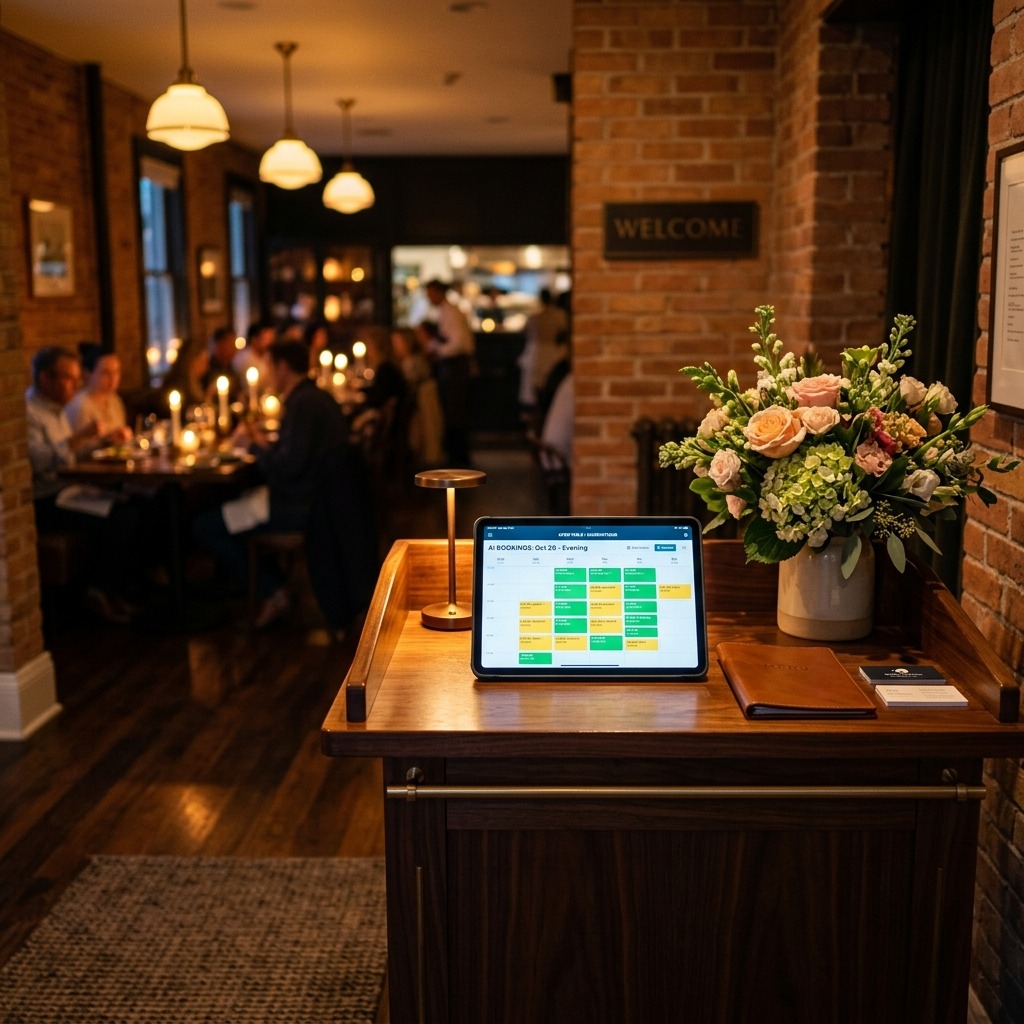
An AI Front Desk Assistant for Restaurants changes what happens during those peak windows in a fundamental way. Every call gets answered. Not sent to a queue. Not routed to voicemail. Answered on the first ring, with a voice that knows your restaurant, your hours, your menu style, your reservation availability in real time, and your policies around things like large party bookings or special occasion requests. A caller trying to book a table for six on a Saturday night gets an immediate response. The system checks availability, confirms the booking, asks about any dietary requirements or special requests, and sends a confirmation to the caller. The whole interaction takes two minutes. Nobody on your floor staff was pulled away from service. No reservation was lost because the host was seating another table when the call came in. For restaurants specifically, the phone is often the highest-intent channel in the business. Someone browsing your Instagram might become a customer someday. Someone calling to make a reservation has already decided. Treating those two with the same level of urgency is a mistake that costs money every week.
The After-Hours Booking Problem
People decide they want to go out for dinner at 9 PM on a Tuesday. They think about celebrating something on a Sunday morning. They plan ahead during moments when your restaurant is either closed or too busy to answer the phone reliably. A system that is live around the clock captures those moments. The caller who decides at 10 PM that they want to bring their family in for a birthday dinner on Friday gets the booking done immediately. They wake up the next morning with a confirmation. They show up on Friday. The table that might have sat empty fills. This is not complicated. It is just coverage that was not there before.
The Nail Salon Reality
Nail salons run on appointments. Walk-ins are welcome, but the backbone of a steady revenue week is a filled appointment book. And the filled appointment book depends almost entirely on how well the salon handles incoming calls and booking requests. The challenge is structural. During the hours when booking calls are most likely to come in, every person in the salon is working. Technicians are with clients. If there is a front desk person, they are often managing check-ins, processing payments, and handling the flow of walk-ins at the same time the phone is ringing. The call gets missed. Or it gets answered with a distracted, rushed interaction that does not leave the caller feeling confident about booking. Either way, the outcome is worse than it should be. The AI Voice Agent for Nail Salons handles inbound booking calls with full attention, every time. The system knows your service menu, your pricing, your technician availability, and your booking lead times. A caller asking for a gel manicure and a brow appointment on Saturday afternoon gets real-time availability, picks a time, and has the booking confirmed before they hang up. No technician was interrupted. No client in the chair was made to feel like they were competing for attention. The booking happened cleanly in the background while your team stayed focused on the work in front of them.
Cancellations and Reschedules Without the Chaos
Last-minute cancellations are a reality in any appointment-based business. The problem is not just the lost slot. It is the scramble to fill it. AI handles cancellation calls and immediately opens the slot back up for rebooking. If there is a waitlist, it can work through it automatically. If no waitlist exists, the slot becomes available for the next caller to grab. The whole process happens without your team needing to manage it manually during an already busy day. That kind of behind-the-scenes efficiency does not sound dramatic, but it changes the math on how many empty slots you end your week with.
The Revenue Picture When You Add It Up
Take a nail salon doing roughly 150 calls per month. If 30 percent of those go unanswered during peak hours or after closing, that is 45 missed conversations. If half of those were ready to book, and the average appointment value is 90 dollars, the salon is leaving around 2,000 dollars per month on the table from missed calls alone. For a restaurant with a similar missed call rate on reservation calls, the number is often higher, given the average party size and spend. These are not losses that show up anywhere visible. They are invisible. The damage is done before any record is created. That invisibility is part of why the problem persists. It is hard to fix something you cannot see. AI makes this visible by making it stop. When every call gets answered, the question of how much you were losing to missed calls gets answered by watching revenue grow without any other change to your operation.
What Getting Started Looks Like
Both restaurants and salons tend to ask the same practical questions before moving forward. Will it match the tone of the business? A fine dining restaurant needs a different voice and style than a casual neighborhood spot. A luxury nail studio communicates differently than a fast-turnover express salon. Current platforms allow this to be configured specifically so the system sounds like an extension of your brand rather than a generic answering service. Will it integrate with the booking system already in place? Most restaurant reservation platforms and salon scheduling tools have integration options available. The configuration work handles this during setup. How long does it take to get running? For most small businesses in these categories, the answer is days. Not weeks. Not months. The system learns your business quickly and can be live before the next weekend rush arrives.
The Simple Truth About Missed Calls
Every call your business misses is a decision someone already made in your favor. They chose you over the other options. They picked up the phone. That decision was made and then reversed by a simple failure of availability. AI does not create new customers. It captures the ones who were already trying to reach you. That distinction matters because it means the revenue is already there. It is just being left on the table by a phone that nobody answered. Fixing that does not require a bigger team or a bigger marketing budget. It requires being available when your customers decide they are ready. And in 2026, being available means being available all the time.