How LiDAR Mining Surveys Are Transforming Modern Mining Operations
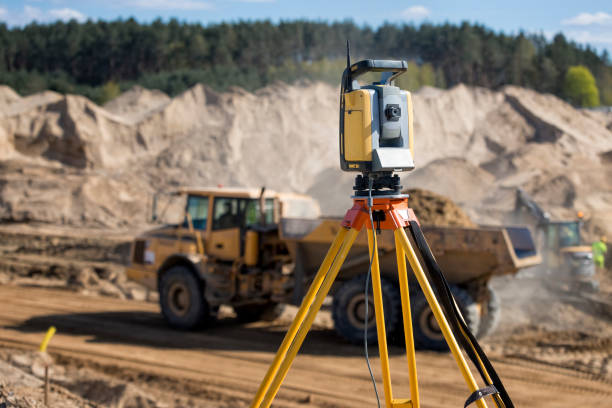
The mining industry is undergoing a significant digital transformation, and LiDAR mining surveys have emerged as one of the most valuable technologies driving this change. As mining companies seek greater accuracy, efficiency, and safety, LiDAR technology provides a powerful solution for collecting precise geospatial data across complex mining environments.
What Are LiDAR Mining Surveys?
LiDAR (Light Detection and Ranging) is a remote sensing technology that uses laser pulses to measure distances between the sensor and the ground surface. By collecting millions of data points in a short period, LiDAR creates highly detailed 3D models of mining sites, stockpiles, and terrain.
Unlike traditional surveying methods, LiDAR can capture large areas quickly while maintaining exceptional accuracy, making it an ideal solution for modern mining operations.
Benefits of LiDAR Surveys in Mining
1. Accurate Stockpile Volume Measurement
One of the primary applications of LiDAR in mining is stockpile volume calculation. Accurate volume measurements help mining companies manage inventory, reduce material losses, and improve operational planning. With precise data, operators can make informed decisions regarding extraction, transportation, and storage.
2. Enhanced Site Mapping
LiDAR technology generates high-resolution terrain models that provide a clear understanding of site conditions. These detailed maps assist engineers and project managers in planning excavation activities, road construction, drainage systems, and site expansion projects.
3. Improved Safety Standards
Mining environments often contain hazardous and difficult-to-access areas. LiDAR surveys reduce the need for personnel to enter potentially dangerous zones by enabling remote data collection. This significantly improves worker safety while maintaining accurate site monitoring.
4. Faster Data Collection
Traditional survey methods can require days or even weeks to cover large mining sites. LiDAR systems mounted on drones, aircraft, or ground vehicles can collect vast amounts of data within hours, reducing downtime and increasing productivity.
5. Better Decision-Making
Modern mining operations rely heavily on data-driven decisions. LiDAR surveys provide actionable insights into terrain changes, excavation progress, stockpile growth, and operational performance. These insights help management optimize resources and improve overall efficiency.
LiDAR Applications Across Mining Operations
LiDAR technology supports a wide range of mining activities, including:
- Stockpile volume calculations
- Open-pit mine surveying
- Underground mine mapping
- Terrain and topographic mapping
- Progress tracking and monitoring
- Environmental impact assessments
- Infrastructure planning
- Site rehabilitation projects
Its versatility makes LiDAR an essential tool throughout the mining lifecycle.
Why Mining Companies Are Adopting LiDAR Technology
As competition increases and operational costs continue to rise, mining companies are looking for technologies that deliver measurable value. LiDAR surveys provide accurate data, faster project turnaround times, enhanced safety, and improved operational intelligence.
The ability to monitor mining assets in real time and generate highly detailed 3D models enables companies to reduce risks, optimize workflows, and maximize profitability.
The Future of LiDAR Mining Surveys
The future of mining is increasingly digital, and LiDAR technology will play a central role in this evolution. Combined with drones, artificial intelligence, and advanced geospatial analytics, LiDAR surveys will continue to improve mine planning, resource management, and operational efficiency.
Mining organizations that invest in advanced surveying technologies today will be better positioned to meet future challenges while maintaining safe, productive, and sustainable operations.
Conclusion
LiDAR mining surveys have revolutionized the way mining companies collect and analyze site data. From accurate stockpile volume measurements to detailed terrain mapping and improved safety, LiDAR offers substantial advantages over traditional surveying methods.
As the mining industry embraces digital transformation, LiDAR technology is becoming an indispensable tool for achieving greater efficiency, accuracy, and long-term operational success.