Women’s Leather Motorcycle Vest with Concealed Carry: What You Need to Know
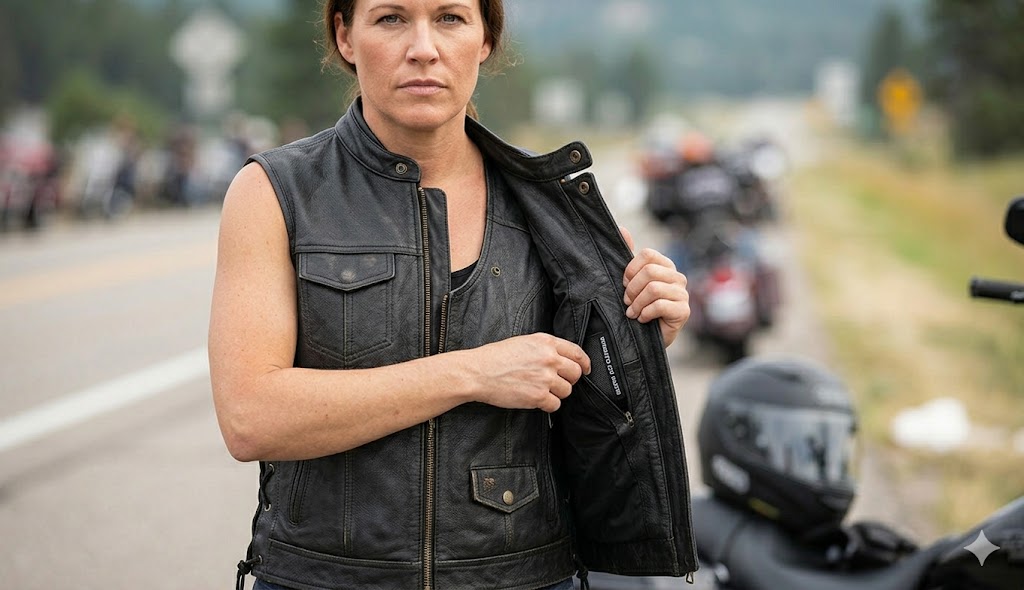
Carrying a firearm while riding isn’t just for the guys. More women riders are choosing to carry for personal protection, whether they’re touring cross-country, commuting through questionable neighborhoods, or simply exercising their Second Amendment rights.
The challenge? Finding a women’s leather motorcycle vest that actually fits your body while providing secure, accessible, concealed carry options. Generic “unisex” CCW vests don’t account for women’s anatomy, and regular motorcycle vests lack the specialized pockets and features needed for safe firearm storage.
Here’s what you need to know before buying a concealed carry vest designed for women who ride.
What Makes a CCW Vest Different from a Regular Vest
A CE standard women’s leather biker vest might have inside pockets, but that doesn’t make it a concealed carry vest. Real CCW vests are engineered specifically for firearms.
The pockets are deeper and positioned strategically for quick access without printing (showing the outline of your weapon through the fabric). They include retention systems, straps, snaps, or built-in holsters, that keep your firearm secure during hard braking, swerving, or if you go down.
The leather is thicker and structured enough to support the weight of a handgun without sagging or distorting the vest’s shape. Cheap or thin leather will stretch out over time, creating an obvious bulge that defeats the purpose of “concealed” carry.
Quality CCW vests also feature reinforced stitching around the gun pockets. These areas take constant stress from the weapon’s weight, and weak stitching will tear, especially on bumpy roads or during long rides.
Key Features to Look for in a Women’s CCW Vest
Not all concealed carry vests are created equal. Here’s what separates functional options from gimmicks:
Purpose-Built Gun Pockets
Look for dedicated concealed carry pockets, not just regular inside pockets marketed as “could hold a gun.” These should be:
- Deep enough to fully conceal your specific firearm model
- Positioned correctly for natural draw motion (usually mid-torso level)
- Ambidextrous with pockets on both sides for dominant hand preference
- Reinforced with double or triple stitching around openings
Some vests include removable holster inserts. These are ideal because they keep the weapon positioned consistently and add another layer of retention beyond just a pocket.
Retention and Security Systems
Your firearm needs to stay put no matter what happens on the road. Quality vests include:
- Adjustable retention straps with snap closures
- Velcro or magnetic security flaps
- Internal holster loops or clips
- Elastic retention bands
Test the retention before you buy. The gun should stay secure when you bend, lean, or move aggressively, but still be accessible quickly when needed.
Proper Fit for Women’s Bodies
This is where most “unisex” vests fail. Women’s bodies have different proportions than men’s, particularly through the bust, waist, and shoulders.
A slim fit women’s leather motorcycle vest designed for concealed carry should:
- Contour around the bust without gaping or pulling
- Taper at the waist for a flattering fit that doesn’t look boxy
- Feature adjustable side laces or straps to customize fit
- Position gun pockets where they’re accessible despite anatomical differences
Poor fit isn’t just uncomfortable, it affects draw speed and can cause printing. If the vest doesn’t sit flush against your body, the firearm becomes obvious.
Premium Leather Construction
The leather needs to be substantial enough to hold shape and support weight. Look for:
- Cowhide or buffalo leather (1.2mm thickness minimum)
- Full-grain or top-grain leather (not bonded or split leather)
- Structured panels that maintain shape under weight
- Quality hardware (YKK zippers, metal snaps, solid D-rings)
Thin or low-quality leather will sag, warp, or show wear quickly when supporting a firearm daily.
Additional Storage and Organization
Beyond the gun pocket, you need separate storage for:
- CCW permit and identification
- Extra magazine
- Phone and wallet
- Registration and insurance documents
Look for vests with multiple interior pockets that keep these items separated. You don’t want your firearm bouncing against your phone, and you need quick access to your permit if law enforcement asks for it.
Safety Considerations for Armed Riding
Carrying while riding requires extra thought compared to carrying in a car or on foot.
Practice Your Draw with Full Gear On
Put on everything you’d wear while riding, your vest, jacket if you layer one over it, gloves, helmet, and practice drawing your weapon in front of a mirror.
Does your jacket block access to the pocket? Do your gloves make it harder to unsnap the retention strap? Does the vest ride up when you’re in riding position, moving the pocket out of reach? Work through these issues at home, not during an emergency.
Secure Retention Is Non-Negotiable
A loose firearm inside your vest is dangerous. Hard braking can shift it. A pothole can jostle it. A crash could cause it to discharge or fall out completely.
Use every retention feature your vest offers. Snap it, strap it, secure it. The gun should not move unless you’re intentionally drawing it.
Weather and Moisture Protection
Leather isn’t waterproof. If you get caught in rain, moisture can reach your firearm and ammunition. Consider a waterproof gun sleeve or case inside the vest pocket, especially if you ride in wet climates. Clean and oil your weapon regularly to prevent rust from sweat and humidity buildup.
Legal Responsibilities You Can’t Ignore
Carrying a concealed weapon comes with legal obligations that vary by location.
- Know your state laws. Some states require immediate disclosure to law enforcement during any interaction. Others don’t. Some honor out-of-state permits; others don’t. If you’re riding across state lines, research every state you’ll pass through.
- Keep your CCW permit accessible. Don’t store it in the same pocket as your firearm. Have it ready to present if required, and keep your hands visible when interacting with police.
- Respect private property. Businesses can prohibit firearms even if you have a valid permit. Pay attention to posted signs and respect those rules.
- Never mix alcohol and firearms. This should go without saying, but many states have zero-tolerance laws about carrying while impaired. Don’t drink if you’re armed. Period.
- Get proper training. A basic CCW course covers legal requirements, but additional training in defensive shooting, situational awareness, and de-escalation is smart. Carrying a weapon means accepting the responsibility that comes with it.
Fit Tips Specific to Women Riders
Standard sizing doesn’t account for the variety of women’s body types. Here’s how to find the right fit:
- Shoulders should sit at your natural shoulder point without pulling forward or sliding back. This positions the entire vest correctly and affects where the gun pockets fall.
- Bust fit matters for concealment. The vest should close comfortably across the chest without straining or gaping. Too tight and it prints. Too loose and the gun shifts around.
- Waist adjustability is essential. Side laces or adjustable buckles let you dial in the fit so the vest sits flush against your body. This prevents the firearm from bouncing and keeps everything concealed.
- Try it with what you’ll actually wear. If you plan to wear the vest over a t-shirt in summer but a hoodie in fall, make sure it fits comfortably in both scenarios.
- Consider the gun you’ll carry. Bring your firearm when trying on vests (unloaded, obviously). Make sure it fits in the pocket, the retention works, and you can draw smoothly.
Caring for Your CCW Vest
A vest that carries a firearm daily needs proper maintenance.
Clean the leather regularly with leather specific cleaner. Gun oil, sweat, and body oils will break down leather over time if not addressed.
Condition every few months to prevent cracking and keep the leather supple. Stiff, dried-out leather is uncomfortable and more prone to damage.
Inspect stitching, snaps, and retention straps frequently. These take constant stress from the weapon’s weight. Catching a loose snap early prevents bigger problems later.
Store properly when not in use. Hang it on a padded hanger in a cool, dry place. Don’t leave your firearm in the vest during storage, unload and secure it separately.