I Don’t Know If a Leather Jacket Suits Me – Here Is How to Check
Almost every person who has thought about buying a leather jacket has had the same thought: “But does it actually look good on me?”
That doubt is very common. And it stops a lot of people from making one of the best wardrobe choices they could ever make. The good news is you do not need a stylist to figure this out. You just need to check a few honest things about yourself.
Why So Many People Feel Unsure
A leather jacket looks effortless on some people and off on others. Most of the time, it is not the jacket that is the problem. It is the wrong cut, wrong color, or wrong style for that person’s body and life.
A few things to know before you decide:
• Around 67% of leather jacket returns happen because of wrong fit, not wrong style
• Leather jacket searches go up by more than 40% every fall and winter
• Over 55% of first-time buyers say they wished they had a proper fit guide before purchasing
• Full-grain leather jackets, when cared for, can last 10 to 20 years with regular wear
Step 1: Check Your Body Type
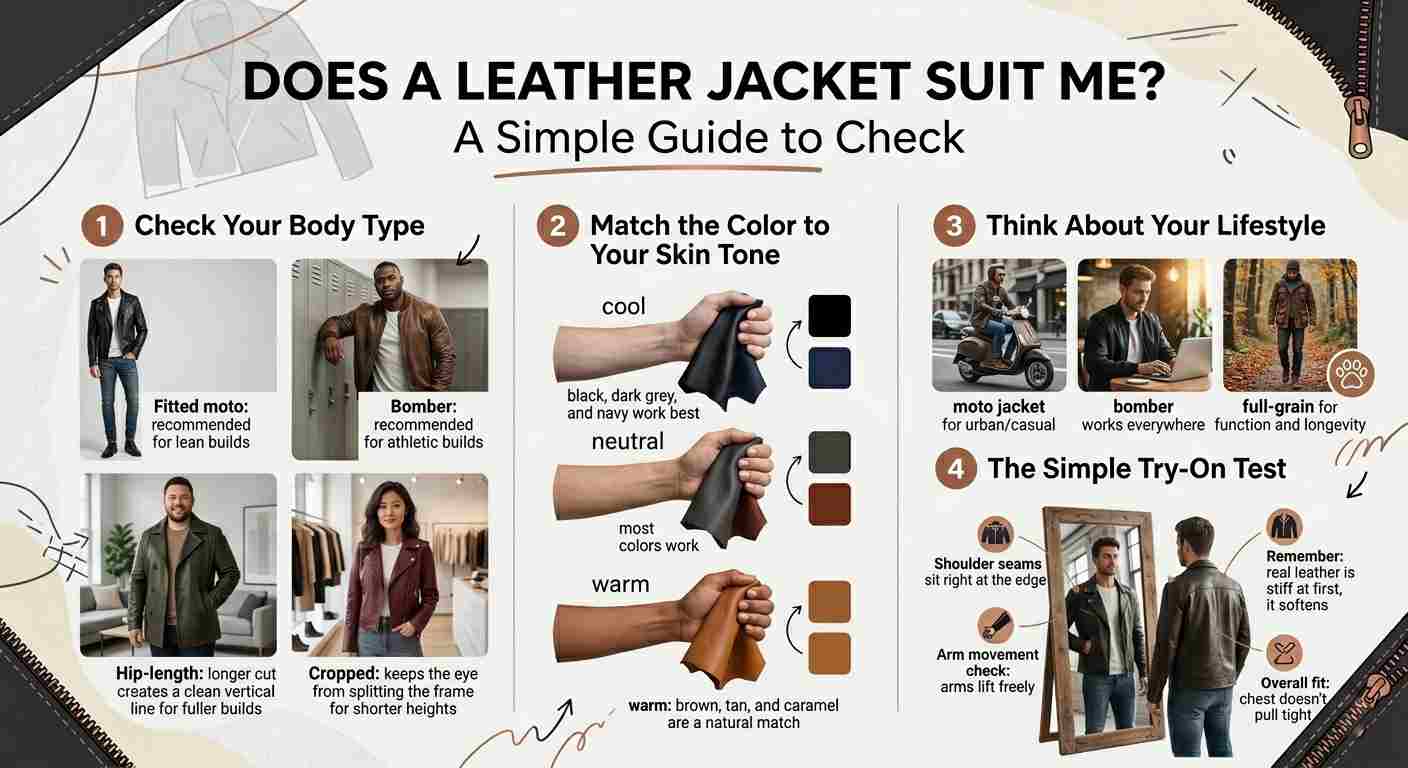
Body type is the first real filter. Here is how different frames match with leather jacket styles:
Slim or Lean Build
A slim fit moto or fitted biker jacket works very well. It adds shape and structure without looking heavy or oversized.
Athletic or Broad Shoulders
A bomber or racer jacket balances the upper body nicely. Stay away from very structured shoulders. They can push width in the wrong direction.
Stocky or Fuller Build
Go for a longer cut. A hip-length jacket or open-front style creates a clean vertical line. Very cropped styles tend to cut the body short and add bulk where you do not want it.
Tall and Lean
Almost every style works here. A longer flight jacket or a relaxed oversized cut can look very sharp.
Shorter Height
Cropped or waist-length jackets work best. They keep the eye from splitting your frame in half, which longer cuts often do.
Step 2: Match the Color to Your Skin Tone
Color is one of the most overlooked parts of this decision. The right leather color can completely change how a jacket reads on you.
• Cool skin tones (pink or blue undertones): black, dark grey, and navy leather work best
• Warm skin tones (yellow, olive, or peachy undertones): brown, tan, cognac, and caramel shades are a natural match
• Neutral skin tones: most leather colors work, which gives you more options
One style that works across a wide range of skin tones is the brown distressed moto jacket. The aged, worn-in finish softens the overall look and adds a natural warmth that flatters both warm and neutral complexions. At Leather Jacket Black, every distressed jacket is built from genuine full-grain leather, so the character only gets better over time.
Step 3: Think About Your Lifestyle
A leather jacket should fit how you actually live, not just how you want to look. Ask yourself a few things:
• Where do I wear it most? Biker jackets are great for urban and casual settings. Bombers work in almost any everyday environment.
• Do I want something easy to maintain? Genuine leather needs basic care but outlasts faux or bonded options by years.
• Am I buying for style or function? Both are totally valid. Knowing your answer helps you pick the right weight and cut.
Step 4: The Simple Try-On Test
Put the jacket on. Stand straight. Look in the mirror. Then check these three things:
• Shoulder seams: they should sit right at the edge of your shoulder, not hanging off it or pulling up
• Arm movement: you should be able to lift your arms without the back riding up or the chest pulling tight
• Overall feel: real leather feels a little stiff at first. That is normal. It softens and shapes to your body over a few weeks of wear
If the shoulders fit and you can move your arms well, the jacket is a good base. Everything else breaks in with time.
One Ownership Tip Most People Miss
Once you find your jacket, protect it. One thing new owners never expect is pet damage. If you have a cat at home, fix cat-scratched leather can show up fast, especially on smoother finishes. Knowing how to deal with them early keeps your jacket looking clean for years.
FAQs
Can a leather jacket suit anyone?
Yes. The key is finding the right cut for your body type and the right color for your skin tone. There is no body shape that cannot wear a leather jacket well.
What is the best leather jacket style for a first-time buyer?
A classic biker or bomber in black or brown is the safest starting point. These styles are versatile and work with most casual outfits without much effort.
How do I know if the fit is right?
The shoulder seam should sit exactly at your shoulder edge. You should be able to move your arms without pulling or tightness across the chest. A little snugness in the body is fine since genuine leather stretches slightly over time.
Is distressed leather good for everyday wear?
Yes. Distressed leather is already pre-aged, which means small scuffs and minor marks blend in rather than standing out. It is one of the most practical styles for regular daily use.
Does leather quality actually make a difference?
It makes a big difference. Full-grain leather develops a rich patina over years of use, holds its shape much better, and lasts far longer than bonded or corrected-grain options. Bonded leather tends to crack and peel within one to two years of regular wear.
What is the difference between a biker jacket and a bomber jacket?
A biker jacket has asymmetric zips, a shorter cut, and a more structured feel. It reads edgier and more urban. A bomber is rounder, softer, and easier to wear casually. Both are classics, but they give off a different energy.
Final Thought
A leather jacket suits you if you pick the right one. That means knowing your body type, understanding your skin tone, and choosing a style that actually fits how you live.
Do not let doubt stop you from finding a jacket that could last you a decade or more. Check these four steps and you will walk into any purchase knowing exactly what to look for.