How to Perform an API Security Assessment Step-by-Step | Complete Guide
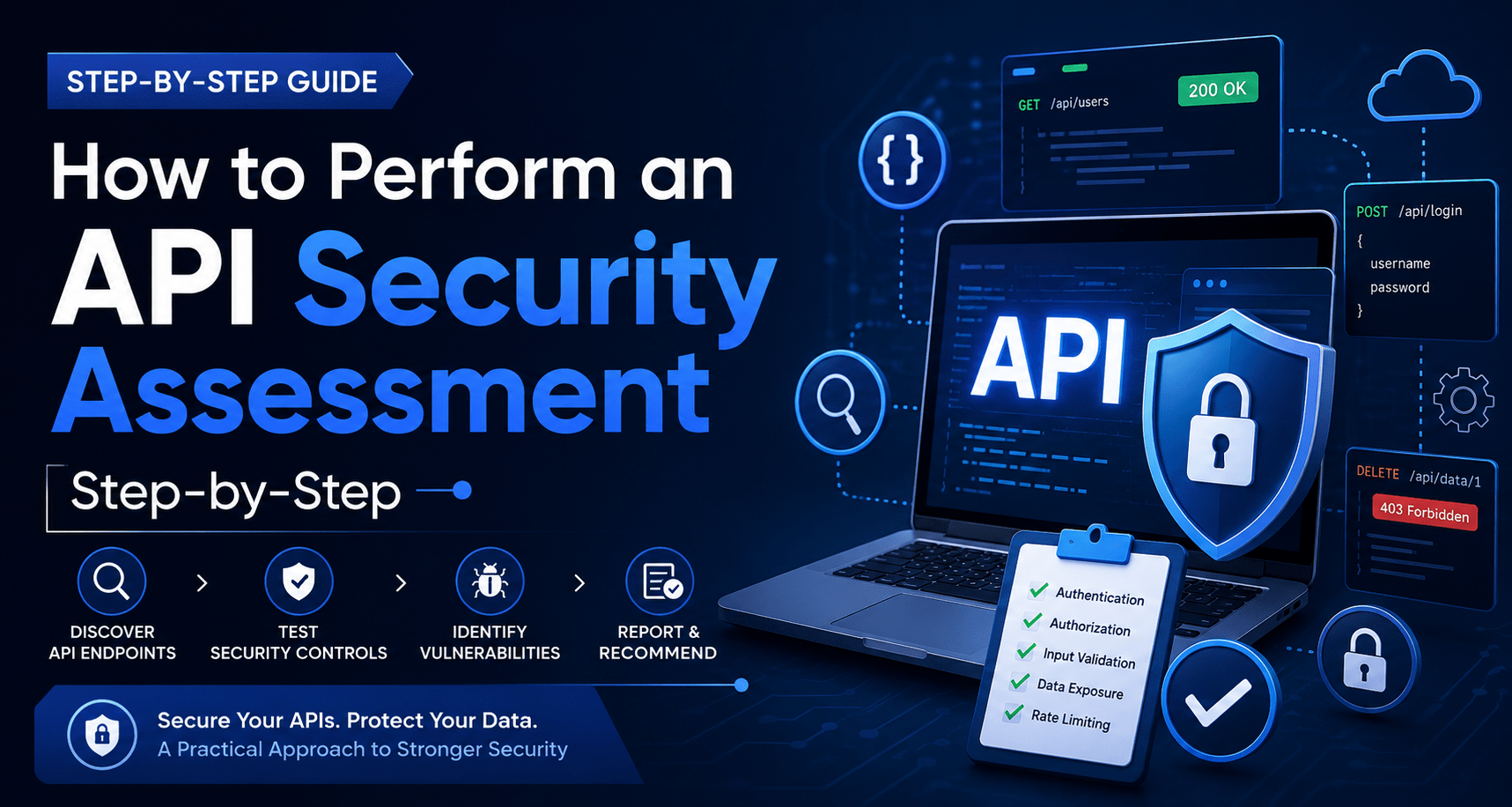
APIs (Application Programming Interfaces) are the backbone of modern digital applications. From mobile apps and cloud platforms to fintech systems and healthcare portals, APIs enable seamless communication between services and applications. However, as API usage grows, cybercriminals increasingly target them to exploit vulnerabilities, steal sensitive data, and disrupt services.
According to multiple cybersecurity studies, APIs have become one of the most attacked components in web applications because they often expose business logic and sensitive information directly to external users. This makes API security assessment an essential practice for organizations that rely on APIs for operations, customer services, or integrations.
This guide explains how to perform an API security assessment step-by-step, including methodologies, tools, common vulnerabilities, and best practices.
What is an API Security Assessment?
An API security assessment is the process of evaluating APIs to identify vulnerabilities, security weaknesses, misconfigurations, and authentication flaws that attackers could exploit.
The assessment helps organizations:
- Detect security vulnerabilities early
- Prevent unauthorized access
- Protect sensitive user data
- Ensure compliance with regulations
- Reduce the risk of data breaches
- Strengthen application security posture
API assessments can be performed manually, automatically, or through a combination of both methods.
Why API Security Assessment is Important
APIs handle sensitive business operations such as:
- User authentication
- Payment processing
- Customer data access
- Cloud integrations
- Internal communication between services
A vulnerable API can lead to:
- Data leaks
- Account takeovers
- Unauthorized transactions
- Service disruption
- Compliance violations
- Financial and reputational damage
Organizations that fail to secure APIs often become easy targets for attackers exploiting weak authentication, broken authorization, and insecure endpoints.
Common API Security Vulnerabilities
Before starting an API security assessment, it is important to understand the most common vulnerabilities.
1. Broken Object Level Authorization (BOLA)
Attackers manipulate object IDs to access other users’ data.
Example:
GET /api/user/102/profile
Changing the ID to another value may expose unauthorized user data.
2. Broken Authentication
Weak authentication mechanisms allow attackers to compromise accounts.
Common issues include:
- Weak passwords
- Exposed tokens
- Missing MFA
- Improper session handling
3. Excessive Data Exposure
APIs sometimes expose sensitive information unnecessarily.
Example:
{
“username”: “john”,
“passwordHash”: “abc123”,
“ssn”: “123-45-6789”
}
4. Lack of Rate Limiting
Without rate limiting, attackers can perform:
- Brute force attacks
- Credential stuffing
- API abuse
- Denial-of-service attacks
5. Security Misconfigurations
Misconfigured APIs may expose:
- Debug endpoints
- Default credentials
- Unsecured cloud storage
- Open admin interfaces
Step-by-Step API Security Assessment Process
Step 1: Identify and Inventory APIs
The first step is discovering all APIs within the environment.
Organizations often have:
- Public APIs
- Internal APIs
- Partner APIs
- Shadow APIs
- Deprecated APIs
Undocumented APIs are especially dangerous because they may lack security controls.
API Discovery Methods
- Review API documentation
- Analyze source code
- Inspect traffic logs
- Use API gateways
- Conduct network scanning
Information to Collect
- API endpoints
- Request methods
- Authentication mechanisms
- Input parameters
- Response formats
- Data sensitivity
Creating a complete API inventory is critical before testing begins.
Step 2: Understand API Architecture
Understanding how the API works helps identify attack surfaces and business logic vulnerabilities.
Analyze:
- API structure
- Authentication flows
- Data flow
- Third-party integrations
- Backend systems
- Cloud infrastructure
Questions to Ask
- Which APIs are internet-facing?
- What sensitive data is processed?
- Which authentication methods are used?
- Are APIs connected to external vendors?
This stage helps prioritize high-risk APIs.
Step 3: Review Authentication and Authorization
Authentication and authorization are among the most targeted areas during attacks.
Authentication Testing
Verify:
- Token security
- Session management
- Password policies
- OAuth implementation
- JWT validation
Common Authentication Issues
- Predictable tokens
- Long-lived tokens
- Weak password requirements
- Missing token expiration
Authorization Testing
Authorization ensures users access only permitted resources.
Test for:
- Privilege escalation
- Horizontal access control flaws
- Vertical access control flaws
Example Test
Attempt to access another user’s data by modifying IDs:
/api/orders/1001
/api/orders/1002
If unauthorized access succeeds, the API is vulnerable.
Step 4: Test Input Validation
Improper input validation can allow attackers to inject malicious code.
Common Injection Attacks
- SQL injection
- NoSQL injection
- Command injection
- XML injection
Example SQL Injection Payload
‘ OR ‘1’=’1
Input Validation Checks
- Parameter sanitization
- Data type validation
- Length restrictions
- Special character handling
Always validate input on the server side.
Step 5: Assess API Endpoints
Every endpoint should be thoroughly tested.
Endpoint Testing Areas
- Authentication requirements
- Authorization checks
- Data exposure
- HTTP methods
- Error handling
Verify HTTP Methods
Ensure dangerous methods are disabled if unnecessary.
Examples:
- PUT
- DELETE
- TRACE
Step 6: Analyze Data Exposure
APIs should expose only necessary information.
Check Responses For
- Internal server details
- Database errors
- Tokens
- Personal data
- Debug information
Example of Sensitive Exposure
{
“userId”: 101,
“passwordHash”: “hashvalue”,
“internalRole”: “admin”
}
Sensitive fields should never be returned unnecessarily.
Step 7: Perform Rate Limiting and Abuse Testing
APIs without proper protections are vulnerable to abuse.
Test For
- Brute force attacks
- Credential stuffing
- Enumeration attacks
- Resource exhaustion
Example
Send multiple login requests rapidly to determine whether protections exist.
A secure API should:
- Limit requests
- Block suspicious activity
- Trigger alerts
Step 8: Evaluate Encryption and Transport Security
Sensitive API communications must use secure encryption.
Verify
- HTTPS enforcement
- TLS configuration
- Certificate validity
- Secure cipher suites
Weak Encryption Risks
Weak encryption allows attackers to intercept data through man-in-the-middle attacks.
Never transmit:
- Passwords
- Tokens
- Personal data
over insecure HTTP connections.
Step 9: Test Business Logic Security
Business logic flaws are difficult to detect automatically.
These vulnerabilities occur when attackers abuse application workflows.
Examples
- Bypassing payment processes
- Manipulating discounts
- Reusing coupons
- Circumventing approval workflows
Testing Approach
Analyze how the API is intended to function and attempt to misuse workflows.
Manual testing is often necessary.
Step 10: Conduct Fuzz Testing
Fuzz testing involves sending unexpected inputs to APIs.
Purpose
- Crash applications
- Reveal hidden vulnerabilities
- Trigger unhandled exceptions
Inputs Used
- Large payloads
- Invalid characters
- Unexpected data types
- Malformed JSON
Fuzz testing helps identify unstable endpoints.
Step 11: Review Logging and Monitoring
Logging helps detect attacks and suspicious activity.
Verify Logging For
- Failed logins
- Access violations
- Token misuse
- API abuse
- System errors
Good Logging Practices
Logs should:
- Avoid storing sensitive data
- Include timestamps
- Capture source IPs
- Support incident investigation
Monitoring systems should generate alerts for suspicious behavior.
Step 12: Validate API Security Headers
Security headers strengthen API protection.
Important Headers
- Content-Security-Policy
- X-Content-Type-Options
- Strict-Transport-Security
- X-Frame-Options
Missing headers increase attack risks.
Step 13: Perform Automated API Security Testing
Automation improves coverage and efficiency.
Popular API Security Testing Tools
OWASP ZAP
An open-source security testing tool.
Features:
- Vulnerability scanning
- Active testing
- Automated discovery
Burp Suite
Widely used for manual and automated API testing.
Capabilities:
- Intercepting requests
- Manipulating traffic
- Security scanning
Postman Security Testing
Useful for validating API functionality and security behaviors.
Nikto
Detects common web server vulnerabilities.
Automation accelerates repetitive testing but should always be combined with manual analysis.
Step 14: Conduct Manual Penetration Testing
Manual testing is essential because automated tools cannot identify all vulnerabilities.
Security experts manually test:
- Authentication workflows
- Business logic
- Authorization flaws
- Chained attacks
Manual testing often uncovers complex vulnerabilities missed by scanners.
Step 15: Prioritize and Document Findings
After testing, categorize vulnerabilities by severity.
Severity Levels
- Critical
- High
- Medium
- Low
Include in Reports
- Vulnerability description
- Affected endpoints
- Risk impact
- Proof of concept
- Remediation steps
Clear reporting helps development teams fix issues efficiently.
API Security Assessment Best Practices
Implement Strong Authentication
Use:
- OAuth 2.0
- Multi-factor authentication
- Short-lived tokens
Enforce Least Privilege
Users should only access necessary resources.
Use API Gateways
API gateways help enforce:
- Authentication
- Rate limiting
- Monitoring
- Traffic filtering
Regularly Update APIs
Outdated APIs often contain known vulnerabilities.
Maintain:
- Security patches
- Dependency updates
- Version management
Conduct Continuous Security Testing
Security assessments should not be one-time activities.
Regular testing helps detect newly introduced vulnerabilities quickly.
OWASP API Security Top Risks
Organizations should align assessments with the OWASP API Security Top 10.
Key risks include:
- Broken Object Level Authorization
- Broken Authentication
- Broken Object Property Level Authorization
- Unrestricted Resource Consumption
- Broken Function Level Authorization
- Server Side Request Forgery
- Security Misconfiguration
- Injection Attacks
- Improper Asset Management
- Unsafe Consumption of APIs
These risks represent the most critical API threats observed globally.
Challenges in API Security Assessment
Large API Attack Surface
Organizations often manage hundreds of APIs across environments.
Shadow APIs
Undocumented APIs may remain exposed without monitoring.
Frequent API Changes
Continuous deployments introduce new vulnerabilities regularly.
Complex Authentication Flows
Modern APIs use advanced authentication mechanisms that require specialized testing.
Benefits of API Security Assessments
Regular assessments provide several benefits:
- Improved cybersecurity posture
- Reduced breach risks
- Better compliance readiness
- Enhanced customer trust
- Faster vulnerability remediation
- Stronger application resilience
Organizations with mature API security programs are significantly better protected against cyberattacks.
Also Read: Why Choosing the Right Repair Service Protects Your Technology
Conclusion
API security assessment is a critical component of modern cybersecurity strategies. APIs expose valuable business data and functionalities, making them prime targets for attackers. Without proper security testing, vulnerabilities can remain undetected and lead to severe financial and reputational consequences.
A comprehensive API security assessment involves identifying APIs, testing authentication and authorization, validating inputs, analyzing business logic, conducting penetration testing, and continuously monitoring for threats. Combining automated scanning with expert manual testing provides the best protection against evolving attack techniques.
Organizations that prioritize API security can significantly reduce cyber risks, improve compliance, and strengthen overall application security. Companies such as Qualysec help businesses identify and remediate API vulnerabilities through advanced security assessment and penetration testing services tailored to modern applications.