What’s The Real Cost Of Building A Fintech Blockchain App? Complete Breakdown 2026
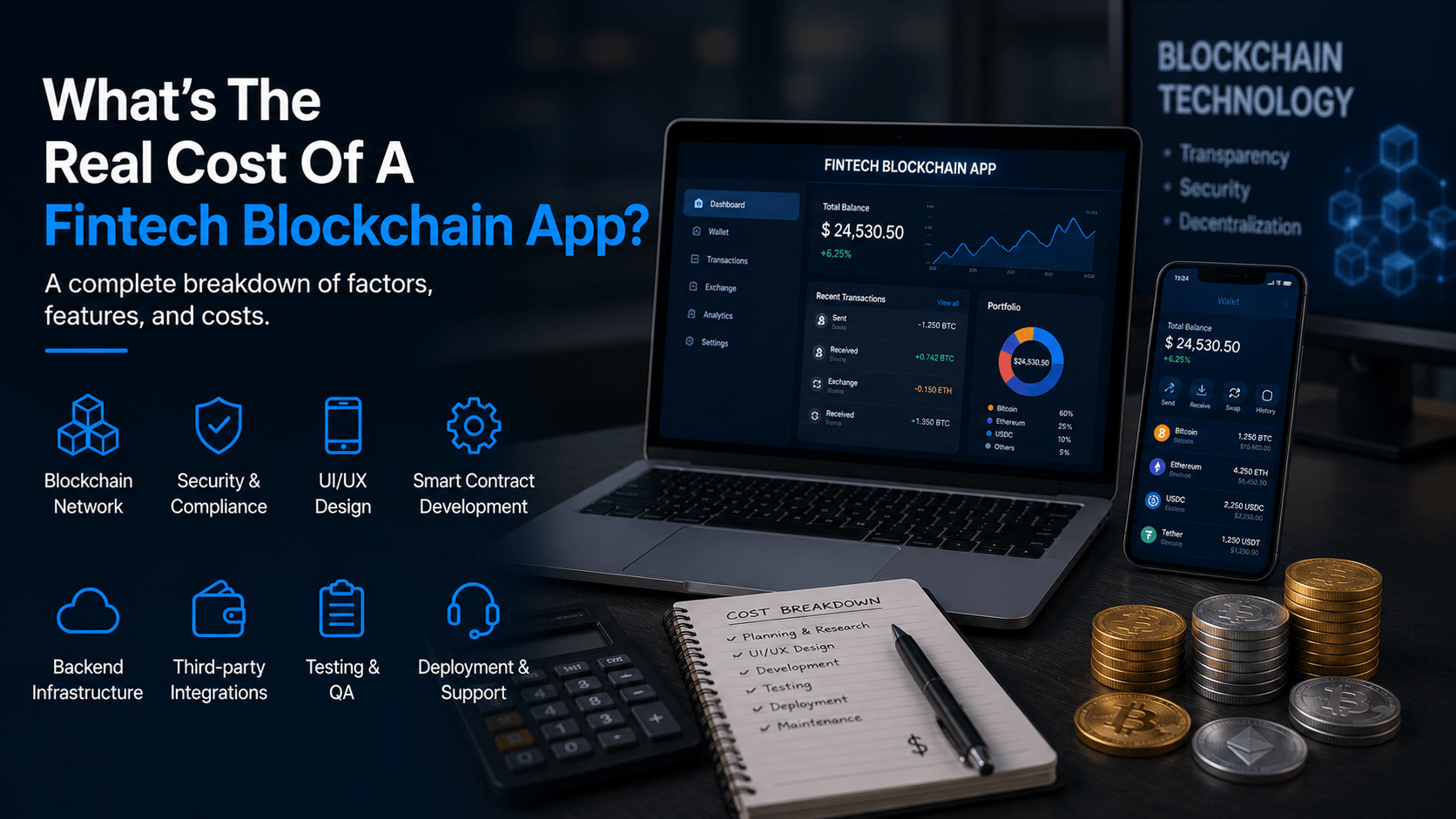
Blockchain and fintech are two of the most disruptive technologies of the last decade. Separately, they’ve changed how businesses handle payments, lending, investing, and digital assets. Together, they have created an entirely new category of financial applications.
From cryptocurrency wallets and decentralized finance (DeFi) platforms to cross-border payment solutions and tokenized investment systems, blockchain-powered fintech apps are reshaping how money moves.
But while the opportunity is exciting, one question comes up early in almost every project:
What does it actually cost to build a fintech blockchain app?
The answer isn’t as simple as a fixed number. Costs can vary dramatically depending on security requirements, compliance obligations, feature complexity, blockchain architecture, and scalability goals.
Many startups begin discussions with a blockchain app development company expecting a straightforward estimate, only to discover that blockchain projects involve far more moving parts than traditional mobile applications.
Let’s break down where the money really goes.
Why Fintech Blockchain Apps Cost More Than Standard Apps?
A typical mobile app focuses on user experience, backend infrastructure, and basic security.
A fintech blockchain application must handle all of that while also managing:
- Financial transactions
- Cryptographic security
- Regulatory compliance
- Blockchain integrations
- Smart contracts
- Fraud prevention
- Auditability
Unlike a social media app or food delivery platform, financial products operate in a highly sensitive environment where mistakes can become expensive very quickly.
One security vulnerability can result in lost funds, regulatory penalties, or permanent reputational damage.
That risk drives much of the development investment.
What Types Of Fintech Blockchain Apps Exist?
Before discussing cost factors, it’s important to understand that not all fintech blockchain applications are equally complex.
Common examples include:
1. Cryptocurrency Wallets
These applications allow users to:
- Store digital assets
- Send and receive cryptocurrencies
- Manage private keys
- Track balances
Examples include Trust Wallet and MetaMask.
2. Payment Applications
Blockchain payment systems focus on:
- Cross-border transfers
- Peer-to-peer transactions
- Merchant payments
- Reduced transaction fees
3. DeFi Platforms
Decentralized finance applications provide:
- Lending
- Borrowing
- Yield farming
- Liquidity pools
These projects are significantly more complex because they depend heavily on smart contracts.
4. Investment And Trading Platforms
These apps support:
- Crypto trading
- Tokenized assets
- Portfolio management
- Market analytics
Examples often include real-time data processing and advanced security requirements.
The Biggest Factors That Influence Development Costs
Two fintech blockchain apps can look similar from the outside while having completely different budgets underneath.
Here are the main reasons.
1. Blockchain Network Selection
Your blockchain choice directly impacts development effort.
Popular options include:
- Ethereum
- Solana
- Polygon
- BNB Chain
Each ecosystem has different:
- Development tools
- Security standards
- Smart contract languages
- Transaction structures
Some networks offer faster development cycles while others require deeper technical expertise.
2. Smart Contract Development
Smart contracts are often the most critical part of a blockchain fintech application.
These automated programs handle:
- Transactions
- Token transfers
- Loan agreements
- Financial logic
- Reward systems
Unlike traditional code, smart contracts are difficult to modify after deployment. That means developers must spend significant time testing and auditing them before launch. One overlooked bug can create serious financial risks.
3. Security Requirements
Security is usually one of the largest budget categories.
Fintech applications often require:
- Multi-factor authentication
- Encryption systems
- Secure wallet management
- Fraud detection
- Threat monitoring
- Penetration testing
Financial applications are attractive targets for attackers.
As transaction volumes grow, security investments typically grow alongside them.
4. Regulatory Compliance
This is where many founders underestimate costs.
Financial applications often need compliance features related to:
- KYC (Know Your Customer)
- AML (Anti-Money Laundering)
- Identity verification
- Transaction monitoring
- Reporting requirements
Compliance varies by region, which means international platforms often face additional development work. Building the product is only part of the challenge. Making it legally operable is another.
5. User Authentication Systems
Fintech users expect strong account protection.
This may include:
- Biometric authentication
- Device verification
- Secure login systems
- Identity checks
Modern fintech apps often balance convenience with security, which requires careful development and testing.
6. Backend Infrastructure
Blockchain doesn’t eliminate backend systems.
Many applications still require:
- User management
- Notifications
- Analytics
- Reporting systems
- Data synchronization
A common misconception is that blockchain handles everything automatically.
In reality, most fintech applications combine traditional infrastructure with blockchain components.
The Cost Difference Between MVPs And Enterprise Platforms
Not every project starts with the same ambition.
1. Minimum Viable Product (MVP)
An MVP focuses on core functionality.
Typical features include:
- User registration
- Wallet integration
- Basic transactions
- Simple dashboards
The goal is validation rather than scale.
2. Mid-Size Commercial Platforms
These products usually include:
- Advanced security
- Multiple payment options
- Analytics
- Compliance tools
- Improved UI/UX
3. Enterprise-Grade Platforms
Enterprise systems may require:
- High transaction throughput
- Multi-chain support
- Advanced compliance systems
- Complex financial workflows
- Large-scale infrastructure
These projects naturally demand larger budgets and longer timelines.
Why Audits Add Significant Cost
Blockchain security audits deserve special attention.
Unlike traditional applications, blockchain systems often manage actual financial assets.
Independent audits help identify:
- Smart contract vulnerabilities
- Logic flaws
- Exploitable code paths
- Security weaknesses
Many successful blockchain projects perform multiple audits before launch.
While audits increase upfront expenses, they can prevent significantly larger losses later.
Ongoing Costs After Launch
One of the biggest misconceptions is that development costs end when the app launches.
They don’t.
Post-launch expenses typically include:
- Security monitoring
- Infrastructure maintenance
- Compliance updates
- Feature releases
- Smart contract upgrades
- Customer support
This is where overall blockchain app development cost calculations often expand beyond initial expectations.
Building the application is only the first phase.
Operating it successfully is an ongoing investment.
How Long Does Development Usually Take?
Timelines vary depending on complexity.
A basic blockchain fintech MVP may require several months.
More advanced applications often require substantially longer because of:
- Security testing
- Compliance reviews
- Smart contract audits
- Infrastructure setup
Rushing these stages usually creates more problems than it solves.
Common Mistakes That Increase Costs
Many projects exceed budget due to avoidable issues.
Examples include:
1. Overbuilding The First Version
Trying to launch every possible feature often delays market entry.
2. Ignoring Compliance Early
Adding compliance systems later is usually more expensive than planning for them from the start.
3. Underestimating Security
Security shortcuts frequently become costly corrections.
4. Choosing The Wrong Blockchain
Switching blockchain ecosystems mid-development can be extremely expensive.
Is A Blockchain Fintech App Worth The Investment?
For many businesses, yes.
Blockchain technology offers advantages such as:
- Transparency
- Faster settlements
- Reduced intermediaries
- Enhanced auditability
- Global accessibility
However, success depends on solving a real financial problem rather than simply adding blockchain for marketing purposes.
The strongest products use blockchain, where it genuinely improves the user experience.
Final Thoughts
The real cost of a fintech blockchain app depends on much more than design and coding.
Security architecture, smart contracts, compliance requirements, infrastructure, audits, and long-term maintenance all contribute to the final investment.
A simple wallet application and a sophisticated DeFi platform may both fall under the fintech blockchain category, yet their budgets can differ dramatically because their technical and regulatory demands are entirely different.
The smartest approach is usually to start with a clear understanding of the problem you’re solving, then build only the features necessary to validate that solution before scaling further.